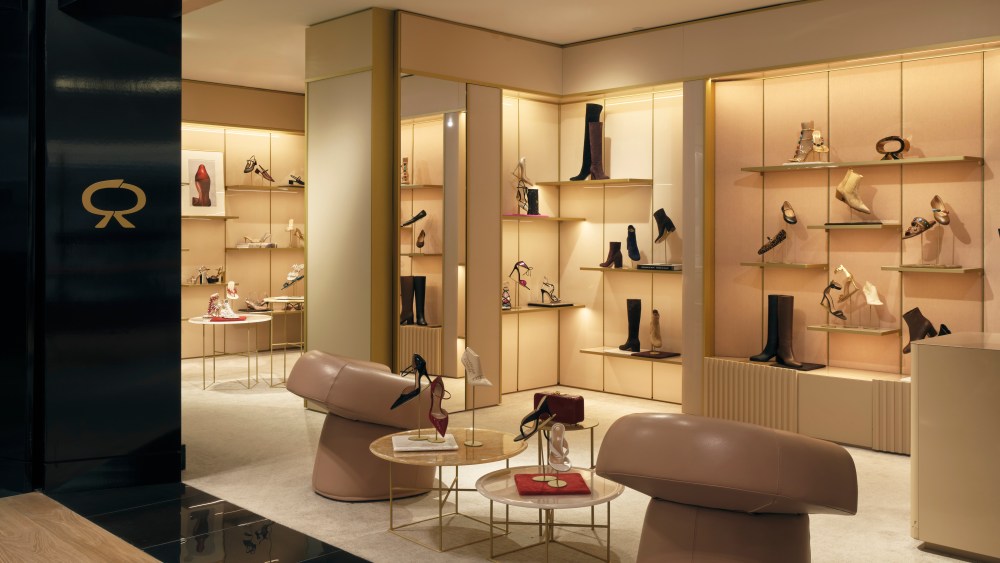
A few weeks ago, Catherine Cook, Bloomingdale’s executive vice president and director of stores, accompanied chief executive officer Olivier Bron on their latest walk-through of the widely transforming 59th Street flagship in Manhattan, gauging progress with renovations.
“The execution and the attention to details are really everything that matters. It’s been something we’ve all had to jump on,” Cook said.
At the 59th Street flagship, renovations are ongoing in designer ready-to-wear, contemporary, the “Arcade” for luxury leather goods and in footwear. Already there are new shops for Christian Louboutin, Gianvito Rossi, Acne Studios, McQueen, Burberry, Valentino, Lafayette 148 and Vuori, among others, not to mention an expansive Chanel duplex. Renovations in menswear will happen this year, with several brands being added to the assortment. The beauty spaces at 59th Street will be updated beginning in 2027.
Related Articles
“We’re in a pretty disruptive phase now and trying to make sure we’re minimizing the disruption for the customer, but we want the construction to go well and still finish the work in the timeline we want,” Cook said. On her store tours, she asks the construction crews whether they have the resources needed to expedite the projects.
You May Also Like
Additionally, “We spent much of our time meeting the new people and the shops that just opened, and understanding how the transformation is going. We’ve hired a lot of new people particularly for the designer areas.”

Cook has been spending more time traversing the selling floors of the 59th Street flagship and branch locations. Last week she visited the retailer’s Chestnut Hill, Mass., store in the Boston area. “It’s a store with some good opportunities. We want to understand the dynamics of the market and the customers. We want to invest in Chestnut Hill.”
It’s among the dozen Bloomingdale’s locations where renovations are either earmarked or ongoing. Renovations are in progress at the South Coast Plaza location in Costa Mesa, Calif., and the Century City, Los Angeles store, as well as on 59th Street.
Increased investments in brick-and-mortar are appropriately timed, given how Bloomingdale’s has been capitalizing on turmoil in the industry, notably the Saks Global bankruptcy, and how consumers, especially Gen Z, are shopping stores more frequently post-pandemic. The Bloomingdale’s team is bolstering partnerships with brands and designers.
“We have 12 stores right now on our capital plan for renovations through 2030. They’re really our top-performing stores. It’s an incredibly ambitious renovation schedule, so part of my role is to look at this and figure out the timing,” Cook said.
She works closely with Denise Magid, Bloomingdale’s chief merchant, adjusting the timing of renovations as designers and brands subscribe to the program.
“It’s a well-choreographed, ever-changing opportunity, balancing the brands we’re introducing, giving them an opportunity to fully express themselves within our stores, and giving customers the chance to experience that.”
The renovations, Cook explained, also center on extending Bloomingdale’s historic strength in the contemporary market, building up luxury offerings, shifting from the store’s black and white codes of the ’80s to a “warmer, much more feminine environment,” and carving out space to nurture new and emerging brands.
Additionally, Bloomingdale’s is reconsidering its approach to food and beverage as part of the renovation push, to get customer “dwell times” extended. Cook suggested the possibility of bringing localized F&B concepts and F&B concepts new to consumers to certain locations. “We’re still in development with that,” she said.
For Cook, visiting stores is “terrific reality checks of what we think is happening versus what we observe. We figure out how to help our store teams. Certainly, we have all the data we need. So we really want to see is what [the store] looks and feels like. We spend time with the general manager for an overview of the business. We’ll always do a coffee chat with either the manager group at some point or a group of associates to get feedback, but the majority of our time is spent on the floor.”
She said she’s visiting stores at least 10 to 12 days a month, on “a pretty regular cadence.” All 31 Bloomingdale’s department stores are taken in during the year, some multiple times.
Cook’s responsibilities includes overseeing the operations and organizations of the Bloomingdale’s department stores and the four Bloomie’s stores, including asset protection, store design, staffing, the customer experience, developing programs for very important customers, or “VICs,” and the restaurant team.
Throughout retailing, turnover of personnel, particularly among selling associates, is generally too high. The work is hard, weekends at the stores are required, and you’re on your feet a lot dealing with the public. Asked if Bloomingdale’s is trying to make the job more appealing, Cook replied, “Certainly on the sales side, we have not had challenges attracting talent. We’ve got a strong selling organization. We’re able to attract people, market by market. It is really up to the general managers to understand exactly who are the best in their market. Many times it’s the sellers already at Bloomingdale’s. Sometimes it’s those at our competitors.” Bloomingdale’s employs 8,843 people, including about 7,500 store employees.
When Cook became director of stores two years ago, after serving as Bloomingdale’s head of human relations, she was dealt a fleet of stores with some clear issues. “There was really this hangover from the pandemic where the stores became so operational and we had to really accelerate our digital business,” Cook said. “So after all of that was over, the stores still operated in a very logistical manner.
“The first thing I noticed as I started visiting stores was that the general manager role, one of the best roles in our company because they actually run their full P&L were not the decision-makers I thought they should be. So one of the first things we did was put the humanity back in — focusing on our colleagues and then focusing back on the customer. The focus on the customer experience had taken somewhat of a backseat to the logistics needs of the store. That was probably the biggest transformation, and we did it by giving the GMs back their authority — the power to drive this customer experience, shifting back to getting to know the customers personally and spending time teaching their teams how to provide a customer experience.”
Customer relationships became less transactional and more experiential, she said. Around the same time, associates were given the Little Brown Book clienteling tool providing AI-enriched customer profiles for the selling team via an intuitive, user-friendly application on their cell phones.
During the pandemic, staffing on the selling floors was reduced. But post-pandemic, “we invested a lot in our selling staff and brought back a lot of talented visual leaders to help animate the stores,” Cook said. “We started adding color to the stores, painting the walls, adding new carpet, really warming up the stores. We got the stores back in shape, maintenance-wise. We’ve invested in the head count of carpenters and maintenance crews in our stores. We’ve been able to touch our highest-performing stores, and we’re moving throughout the country to do this. I’d say two-thirds of the stores experience has seen something change.”
Bloomingdale’s has built a program involving taking VICs to fashion weeks in Paris, Milan and New York, something some luxury competitors have been doing for much longer. “We’re equipping our personal shoppers to sell at this level and to think about knowing each customer personally, and what resonates most with them. Most of our experiences are very personalized based on how well we know these customers.”
Bloomingdale’s has also been developing meatier marketing campaigns and catering more to VICs. The current “California Love” spring campaign is a case in point. “We just came back from a week in California where we had about 20 to 25 customers either California-based or from around the country to meet us for some exciting events,” said Cook, noting Bloomingdale’s partnered with Jonathan Simkhai and other brands.
VIC perks run the gamut, from multiday trips to early access to new shops or product launches. Regarding what expenses are covered for bringing VICs to the special events, “We have different models for all of these,” Cook said, depending on the VIC.
Cook is also involved in the relatively new “Saturdays at Bloomingdale’s” events geared to make the store experience as much about socializing and having fun as shopping. “We’re happy if somebody’s there for the entire day and just enjoys our environment,” Cook said. “These are also great times to bring in local businesses and expose customers to something they haven’t seen before. Most of our stores are participating in Saturdays at Bloomingdale’s.” It’s a format she intends to expand through the Bloomingdale’s fleet.